Signs You Need Refrigerator Repair
A dirty condenser coil, a worn door gasket, a failing thermostat, or an aging compressor usually causes refrigerator trouble, and each shows up as temperature, noise, or frost changes.
Published
Part of our Refrigerator Repair service.
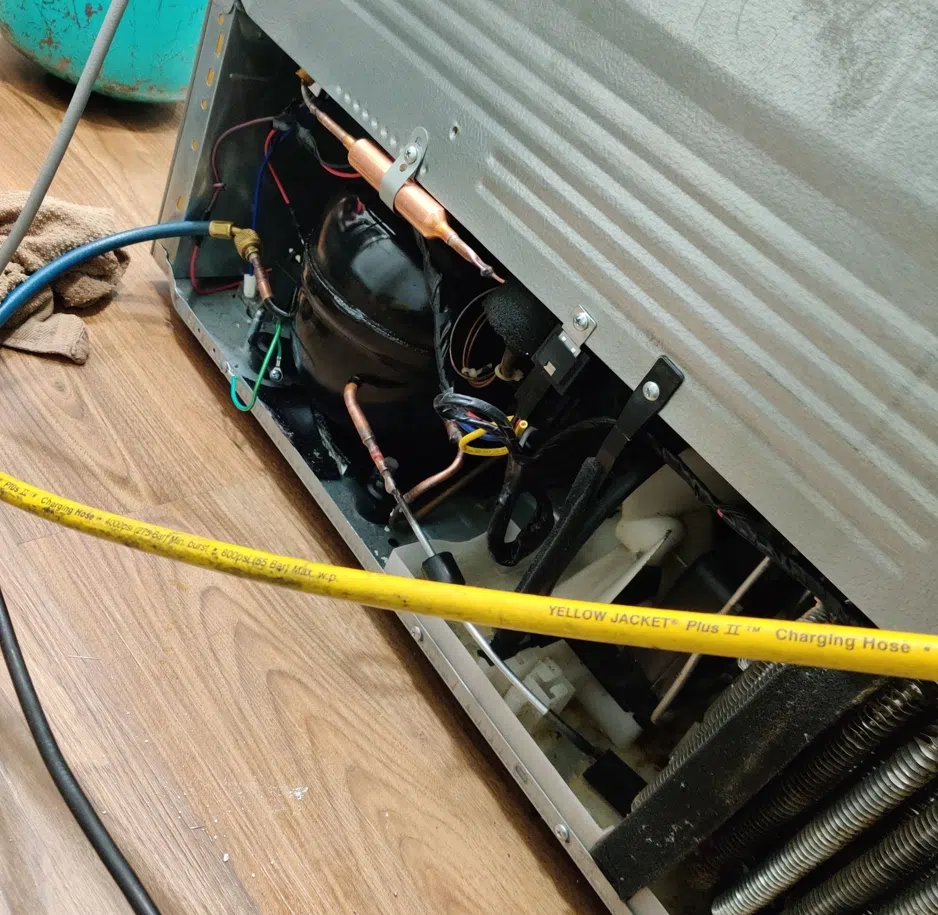
What a Failing Refrigerator Looks Like
Refrigerators rarely die without warning. In New York apartments and houses, the early signs build up over weeks and are easy to miss. Milk spoils faster than it should. The back of the fridge feels hotter than usual. The compressor runs almost nonstop, then shuts off for long stretches. This guide comes from 5a Electronic Services.
The cause is often simple. Dust on the condenser coils, a door gasket that has lost its seal, or a thermostat drifting out of calibration. A technician from our Refrigerator Repair team can sort out which one it is during a visit.
Quick Checks Before You Call
A few minutes with the fridge tells you a lot. Work through this list:
- Feel the door gasket all the way around. If it is cracked, torn, or pulls away easily, cold air is leaking out.
- Look at the condenser coils behind or beneath the fridge. A layer of dust or pet hair means the unit cannot shed heat.
- Put an appliance thermometer on a middle shelf. Above 40 degrees means the food-safe range is gone.
- Listen to the compressor. Clicking on and off every few minutes is a warning sign.
- Check the back wall or freezer for frost buildup that keeps returning.
- Confirm the vents inside the fridge are not blocked by containers. Any one of these findings narrows the problem before a diagnostic visit.
The Fridge Runs Constantly
A compressor that never shuts off is usually fighting a losing battle against heat. Dirty condenser coils are the most common reason, followed by a weak door gasket letting cold air escape. In a hot kitchen or a tight New York apartment closet install, poor airflow around the unit makes it worse.
Clean coils and a fresh gasket often solve it. If the compressor still runs nonstop after that, the motor itself may be wearing out, and that is a repair worth scheduling before it fails completely.
Food Spoils Even on the Coldest Setting
When the dial is maxed out and the milk still goes sour, the cooling system is not keeping up. A thermostat that no longer reads accurately, a frozen evaporator coil blocking airflow, or low refrigerant can each cause it. Weak airflow from the vents inside the cabinet points to a defrost or evaporator problem rather than the thermostat.
Do not keep adjusting the dial. Track the actual shelf temperature for a day, then have the unit diagnosed before the compressor burns out chasing a setting it cannot reach.
Frost Builds Up Behind the Freezer Back Panel
A frost pattern that keeps returning after you defrost it points to the automatic defrost system. A failed defrost heater, timer, or sensor lets ice accumulate on the evaporator coil until air can no longer circulate. You notice it as a fridge section that warms up while the freezer seems fine.
Manual defrosting buys a week or two, then the ice returns. The fix involves testing the defrost components and replacing the one that failed, which is standard Refrigerator Repair work.
Water Puddles Under or Inside the Fridge
Water on the floor usually means a blocked defrost drain. Food debris or ice clogs the drain line, so defrost water has nowhere to go and pools under the vegetable drawers or leaks out the front. A cracked drain pan or a supply line leak on models with ice makers can do the same thing.
Flush the drain opening with warm water if you can reach it. If the puddle keeps coming back, or you cannot find the source, have a technician trace it before the water damages flooring.
Loud Humming, Clicking, or Buzzing
Refrigerators hum quietly. Buzzing, rattling, or clicking every few minutes is different. Rapid clicking often means the compressor start relay is failing, so the compressor tries to start, gives up, and tries again. A rattling fan blade or a loose drain pan causes other noises you can trace by ear.
A failing relay is a small part today and a dead compressor later. If the clicking pattern repeats, shut the unit down and book a diagnostic rather than letting the motor cook itself.
The Freezer Works but the Fridge Is Warm
This split points to an airflow or defrost problem, not the compressor. The freezer makes the cold; a fan and a set of ducts move it to the fridge section. When ice blocks the evaporator coil or the evaporator fan dies, the freezer holds temperature and the fresh-food section drifts warm.
Check whether the freezer back panel is heavy with frost and whether you feel any airflow from the fridge vents. Either finding means a repair visit rather than a new fridge.
When to call a pro
Some findings are past the do-it-yourself stage. Compressor clicking or short cycling, frost that returns after a defrost, warm food on the coldest setting, repeated water leaks, or a fridge that runs nonstop even after the coils are clean all need parts and gauges homeowners do not have.
Anything involving refrigerant or a compressor replacement is sealed-system work best left to a technician. 5a Electronic Services handles Refrigerator Repair across New York, Brooklyn, Queens, and the Bronx, plus the New Jersey side, and you can reach us at (917) 436-6599 to describe what you are seeing and schedule a diagnostic.
Ready to move forward? See our Refrigerator Repair service
Related guides
Written by the 5a Electronic Services team.
Signs You Need Refrigerator Repair FAQs
What is the most common refrigerator repair?
A failed door gasket and dirty condenser coils top the list, followed by thermostat and defrost system failures. Gaskets and coils are maintenance-level fixes, while defrost and thermostat problems need parts. A technician can usually tell which one you have during a single diagnostic visit.
How long should a refrigerator run between cycles?
A healthy fridge runs the compressor for 15 to 30 minutes, then rests for a similar stretch. Constant running with no rest cycle means it is fighting a heat problem, usually dirty coils or a leaking gasket. If it clicks on and off rapidly, the start relay may be failing.
Is it safe to keep using a warm refrigerator?
Short term, yes, but food safety is the limit. Perishables should stay below 40 degrees, and a warming fridge crosses that within hours. Move what you can to a cooler with ice or a working fridge, then schedule repair rather than running the unit nonstop and risking compressor damage.
Can a refrigerator compressor be repaired?
Sometimes. A failed start relay is a modest repair, but a compressor that has seized or lost its cooling ability needs replacement, which is a sealed-system job involving refrigerant handling. A diagnostic visit tells you whether the repair is reasonable for the age and condition of your unit.
Have a question we did not cover? Ask us directly